

A few weeks ago, I attended the Caribbean Vibrations Festival at Harbourfront Centre in Toronto. I was interested in the rum tasting event because I wanted to try different types of rum, my favourite kind of spirit. The event was a little disorganized. They only had three brands of rum to choose from, instead of the five they had promised, but the bartenders were excellent, and I had a great time.
About halfway through the rum tasting, a group of three men sat on some chairs behind me. I was speaking with a few young Jamaican Canadians. We were talking about food and the similarities and differences in Jamaican versus Haitian cooking.
All of a sudden, I heard a piercing whistle. If you’re from the Caribbean, you’d know exactly what that whistle meant. It was a “get your ass over here” kind of whistle. Perhaps, even if you’re not from the Caribbean you’d be able to guess the intent behind that whistle. It was definitely not a “Hey there. How are you?” whistle or a “Hey baby, you’re sexy” whistle. There was authority and purpose behind it.
I immediately turned around to see who could be making that sound and why. In case you haven’t noticed, I’m a curious person. The man was looking to his right, near the entrance to the tent. There was a young female staff member, maybe in her mid to late twenties, who had also turned around at the sound. I suddenly had the thought that he’d whistled at her, and my hackles rose. She looked to him and pointed at herself, as if to say, “Are you trying to get my attention?”
He gave a sharp nod, and she reluctantly walked over. Indignant on her behalf, I looked to some of the senior staff to see whether they’d do anything. They seemed completely unaware of the situation. The young woman leaned over to the man, and they spoke for a brief moment before she walked back to her post.
I was steaming at the audacity and complete lack of respect the man had displayed toward this young woman. I mentioned to the group I was with that this behaviour might still be acceptable in the Caribbean, but we were in Canada now. Attitudes needed to be adjusted. Certain things were just not acceptable, and that was one of them.
I was on the verge of walking over to him to give him my opinion, but I decided to calm down first and think things over. After all, it’s never good to approach a situation with emotions on high, particularly if they are negative ones. I let things go at that moment, but as the event was winding down and both the young woman and the man were still around, I decided to test the waters.
Perhaps the woman had interpreted things differently than I had. I reasoned that I might have been projecting my own feelings of outrage about the situation. So, I approached her and asked her how it had felt to have the man whistle at her. She had that bewildered/slightly disgusted expression back on her face as she recounted that he’d called her over to ask about whether there would be entertainment during the one and a half hours we were doing the rum tasting. She, too, had been startled by his whistle and found it inappropriate.
“But I’m so used to people treating me this way by now; it’s not even shocking anymore,” she said.
It made me sad that she was getting abuse from all kinds of people at her job. I asked her how she would feel if I spoke to him. I felt like she was owed an apology, and I told her so.
At first she kind of shrugged, as though what had happened wasn’t a big enough deal to warrant a talk, but then she said, “If you’re okay with that, then yeah. I’d appreciate it.”
I told her I couldn’t guarantee an apology, but I would at least speak to him and see what had happened from his perspective.
The man was heading out with his friends when I waylaid him.
I smiled at him and said, “Hi.”
He responded in kind.
I asked him where he was from in the Caribbean. He said was from Trinidad and Tobago, but then he looked at me with suspicion and not a little defensiveness. I don’t blame him. It’s odd to just approach someone and ask something like that.
“Why . . .” he started to ask.
“I’m from Haiti,” I said before he could finish his question.
He immediately dropped his guard.
“Oh, Haiti! That’s nice!”
“Yeah,” I said, “I wanted to come here today to try out the different rums and see what’s what.”
He smiled at that and nodded.
I told him how earlier I had heard him whistle at the woman.
“Do you remember that?” I asked.
“Yes,” he said, perfectly pleasant.
I mentioned how I could understand that it would be acceptable to do that in the Caribbean, having experienced it myself plenty of times in Haiti, but that here, people interpreted things differently.
His response surprised me. He told me that he had whistled at his friend, who had been several metres behind this woman, outside of the tent we stood in. He had been whistling him over, not her. But when she’d turned around and pointed to herself, he figured he might as well talk to her. He had essentially taken the opportunity to ask a question since he’d already had her attention.
That made so much more sense! Especially given how rending that whistle had been.
Then he added how annoyed he was that he had to cater to white people’s sensitivities.
“I would have been upset, too, if I thought someone was whistling at me like that,” I said.
“You would?” he asked, surprised.
“Absolutely. It’s one thing to have a friend whistle me over, but a perfect stranger? And a man, at that? No, I would not be okay with that.”
He nodded his understanding and agreed that it could be construed as rude.
I clarified to him that the woman had not asked me to speak to him. I came to speak to him of my own accord because I knew that she’d interpreted his whistle as I had.
“I’m sure she’d appreciate an apology from you,” I said to him.
He paused for a moment, and then said, “I’m not going to do that.”
He raised the issue about how Black people are always having to apologize for everything under the sun. Like we have to apologize even for existing. He was sick of it. He’d done nothing wrong.
He was right. If what he said was true, and I believed him, then he didn’t need to apologize.
I could empathize with the feeling he was expressing, this sense that the Black man was somehow always in the wrong. It’s been a running theme in North American for hundreds of years. But I also knew that things were different in the Caribbean. This man was in his fifties. He also had an accent, so it was likely he’d grown up in Trinidad. I don’t know that he would have had the experiences he was talking about back home. But the reality is that I didn’t know his lived experience, and I didn’t know how often he’d apologized, if ever. He mentioned that many of his friends felt like they had to say sorry all of the time, and they were all sick of it.
I told him I understood, that it was a difficult thing to contend with, for sure. But I also said the fact that his intentions had not been to call her over meant that what had occurred was a miscommunication. I thought acknowledging that misunderstanding would do a lot to smooth things over. Wouldn’t it be better, after all, to have people think positively of us Caribbean people? He didn’t have to apologize, but he could explain to her what had actually happened. It would no doubt help her see things differently, and that would also help give her a better impression of us islanders.
I give this man immense credit because he really thought about what I said. He was quiet for a little while, and I could see him ponder my words. Perhaps he was coming around, I thought with bated breath. In the end, however, he called himself stubborn and said he wouldn’t go speak with the young woman. There was a bit of an apology in his expression as he said this to me.
He couldn’t get past the race aspect of things and having to explain himself or apologize to a white person for something he didn’t do.
“You see,” I told him, “I look at this as more of an act of compassion than a race thing. Putting race aside, this is a human thing. She was uncomfortable about the exchange, and speaking with her could have eased that discomfort.”
He acknowledged my words.
“You wouldn’t want someone to think ill of you over a misunderstanding, would you?” I added “Wouldn’t you want to avoid that perception if you could?”
He agreed, yet maintained his position.
But,” I continued, “I can understand where you’re coming from, and I can respect that decision.”
“You’d probably be the better person to explain to her anyway,” he said. He was giving me permission to share his thoughts and perspective on things with that young woman.
I told him I would convey his message, but I still thought it would have been better coming from him.
The man surprised me even more with the words he said next.
“I will no doubt think about this conversation in the days to come and determine that you were right. I believe in growth; it’s a big part of my life. But in this moment, I just cannot be the bigger person.”
He then introduced himself, Alvin, and then asked me my name. I gave it.
He held out his hand, and we shook.
The loveliest thing about our exchange is that at no time did we raise our voices or use angry words. We didn’t sling insults or cower from the conversation. It was simply an exchange between two people.
I thanked him for the conversation, for being so calm and respectful through it all. I thanked him for being open to speaking with me. Many others would have been defensive.
We parted ways, wishing well for one another, and then he walked away to join his friends.
About thirty minutes later, I was sitting at a table a fair ways away from the rum tasting tent when the young staff member passed by, speaking on her walkie-talkie. I waved at her, and she stopped. I asked her if she had a moment and invited her to sit down.
She was meant to meet someone, she told me, but she sat.
“It won’t take long,” I said, “I just wanted to update you on what we spoke about earlier.”
I went on to tell her about my conversation with the man. I didn’t hide anything from her. I explained what his intention had been and why he hadn’t apologized. I explained his complicated feelings about race in this context. I also told her that I believed him and that he’d given me permission to speak with her on his behalf.
“Do with this information as you will,” I said. “You can choose to accept it or reject it; it’s up to you.”
I added that I hoped what I said would provide some solace because I knew that if I had been in her position, that exchange would have bothered me that night, in bed, as I went over the day. She nodded acknowledgement of that.
“Wow,” she said. “I’ve never had a guest look after me like you have. I’m really appreciative that you went so out of your way for me when you didn’t have to.”
She had a bit of a dazed expression on her face, like she couldn’t believe what had happened and what I’d done. I also found it interesting that she called me a guest, like there was this separation between us: host versus guest. I wondered whether it was easier for her to work there when she created that barrier: from human and human to host and guest.
I told her that if I could smooth things out, then it was totally worth the effort because I would want to go to sleep that night feeling a bit better about things. I asked her if my conversation with the man had brought her any comfort at all. She said that it had.
I choose to believe her too.
With a couple of weeks of hindsight I do wonder if I did well there or whether I stuck my nose where it didn’t belong.
The man could have reacted badly.
He could have blamed the woman.
He could have been aggressive with me.
He could have been aggressive with her.
She could have blamed me as a result.
It could have totally turned to shit.
All of these things had been possible.
Indeed, I could have made things worse.
But I hope I didn’t.
I hope she felt a tiny bit better that night.
And I hope that Alvin did think about things a few days later and decide that he will make a different decision next time a situation like that pops up.
I, for one, feel like I did a good thing. I think? I didn’t lay in bed that night and think about what I could have done but hadn’t. I didn’t look away when it would have been easier. I didn’t pretend that someone wasn’t suffering.
There is a famous quote often attributed to American activist Malcolm X, but originally sourced from Hillel the Elder, a Jewish scholar who lived in the first century BCE:
If not now, then when? If not me, then who?
That quote reminds me that speaking up can have value. There was a time when I wouldn’t have spoken up for others or for myself, too afraid of the repercussions. But, sometimes, speaking up for others who can’t is the right thing to do.
I feel okay about things because I obtained permission first. I didn’t go barging in and insert myself without a care for any of the parties. I didn’t approach Alvin with anger, and I didn’t go against the young woman’s wishes. Equally important, I didn’t leave that place that day feeling badly that I’d stood by and done nothing.
I want to leave a final thought for Alvin.
Though I had started off that afternoon thinking he was the villain, speaking with him was really insightful. He unpacked a slew of issues he has to live with and manage on a regular basis. I am not a Black man who has to navigate North America and how different it is from home. He conducted himself with so much dignity, and I am grateful for the exchange we had. He reminded me that there is much beneath the surface of others. It is something worth remembering, and so I thank him.
I hope that he, too, learned something from our exchange that day, but mostly, I feel I did the learning. I learned that the young woman was not the only one who deserved compassion.
Until next time.

#11 A Giving Spirit
I lived in France for three years in my twenties (2003–2006). I had moved there for love, and despite my best efforts, that relationship hadn’t worked out. Still, I had a work permit, a job, and I was slowly making my own friends.

#10 Reciprocity
Several months ago, a man I’ve been seeing became woefully sick. He hadn’t had a cold or other illness like this in decades, he told me. He seemed both perplexed and angry that his body had betrayed him.

Articles coming soon
Lorem ipsum dolor sit amet, consectetur adipiscing elit, sed do eiusmod tempor incididunt ut labore et dolore magna aliqua. Ut enim ad minim veniam, quis

#9 Boundaries? What Boundaries?
As we navigate life, trying to squeeze the best out of every day, we are inevitably faced with tough scenarios. My perspective on the world is unique simply because each of us is unique. I view things through a lens that has been shaped by my childhood, the interactions I’ve had in my adult life, and the many good and bad experiences I’ve had along the way. My traumas will be different from yours, and what triggers me might not trigger you.

#8 The Accountant, the Boss and the Lawyer
I lived in France for three years. Much of that time was spent working for a business school as the incoming students’ coordinator. It was a really interesting job. There was rarely a dull moment as I dealt a lot with students who were from another culture and who often had random questions they came by my office to ask. In some ways, I was a kind of therapist to them, helping them solve problems and providing an ear when they wanted to talk.
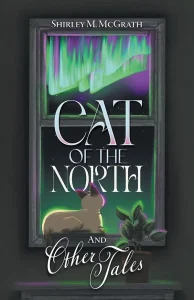
Cat of the North and Other Tales by Shirley M. McGrath
I will fully admit that I’m not a cat person. First, I am allergic to cats, so that doesn’t help matters. But, in addition to that unequivocal bias, I also find cats to be rather standoffish. The cats I have liked the best tended to be the ones that behaved most like dogs, and the dogs I have liked the least tended to behave most like cats.