


When I started editing books in earnest in 2021, I received a lot of manuscripts in the non-fiction genre. I love fiction, and have been reading it my whole life, but I was intrigued by the true stories that arrived in my inbox.
There is something about non-fiction that affects me in a different part of my brain, a different area of my heart. Much of the non-fiction I edit consists of memoir, self-help and spiritual or business-related books. They each present me with an interesting challenge with regards to how to approach the writing.
Perhaps the genre that touches me the most is memoir. I find the act of someone sharing their inner world with others extraordinarily courageous. In a society in which facades are still very much the norm—many of us only choosing to present the pretty package through a filter of some kind—memoirs present us with an opportunity to share our darker sides.
Granted, how much the author chooses to share will depend on them and the story they are telling, but their willingness to be vulnerable is something commendable in a world that insists we show brute strength, extreme stoicism or indefatigable patience.
The truth is, we can be these above things, but we can also be soft and have moments of weakness. We can have thoughts that shock and scare us, and we can have anger that takes over our bodies. We can say mean things, and we can make mistakes that will change the course of our lives.
All of these things are also true.
Over the past few years, I’ve had the opportunity to edit some memoirs that showed both incredible vulnerability and admirable strength. One of the books I edited was written by a woman who had experienced multiple pregnancy losses.
(Note that I choose to use the term “pregnancy losses” rather than “miscarriages” because thanks to this author, I understand now that for many women, the term miscarriage can allude to a woman’s inability to “properly carry” a child, causing undue emotional injury.)
Despite her trauma, the author of this book felt compelled to push through her pain and share her story so the stigma attached to such experiences can eventually fade away.
Writing about difficult subjects can easily bring dark feelings to the surface. What’s more, sharing one’s writing with a stranger who will judge said writing can feel doubly exposing. People want their books to be treated with care because their hearts are tender, particularly when they are sharing of themselves in such a vulnerable way. I can completely understand where they are coming from.
Writing a book is an act of creation. We could liken it to giving birth to a new and independent thing. But in giving birth to this new and delicate creature, we expose it to all the good and bad that exists in the world. And, of course, we all want to protect that brand new thing from the bad things and experience only the good things.
How, then, do editors tackle such projects?
When writing all of my evaluations, I emphasize the respect I have for the process the author went through to write their book. It’s hard work, and they deserve praise for that. When it comes to writing about trauma, I approach the process with even more delicacy, reaching into my stores of compassion for them. It’s difficult to ask people who have experienced trauma and deep heartache to dig deeper. You don’t want to cause harm, but you also want their work to be the best it can be. Essentially, it’s about finding the right balance between showing them you see them and acknowledge their pain, and pulling their best work out of them.
So, I pushed this author, but as gently as I could.

When we humans recount harrowing experiences, we often try to state the facts in as stoic a manner as possible. It’s our way of protecting ourselves from the pain. I do it, too, depending on the topic. But that’s not always the best strategy in a memoir.
If you want the reader to attempt to understand what you went through, it’s important to share the thoughts and feelings you experienced at the time. Barring that, it’s important to share the fact that you don’t remember the thoughts and feelings at the time, for whatever reason: Shock is often a cause. Regardless of how you explain it, addressing it in some way helps to bring the reader in.
Throughout the manuscript, I often found myself writing, “How did you feel when that happened?” “What were you thinking when you saw this?” “What did the people around you do?” “Were you alone during that time, or did you have support?” “What did you do when you understood that?”
I wasn’t looking for a particular action, feeling or thought, but I did hope the author would try to revisit that moment and see it with fresh eyes; I did hope she would choose to share with the reader another layer beyond just the surface happenings.
To provide an example within the manuscript itself, at one point the author was having a cigarette with a co-worker who—staring pointedly at her while she was smoking—inquired about the author’s pregnancy. The author told the co-worker that she’d lost the baby. The wording was very matter-of-fact in the dialogue, but when the author shared her feelings with the reader in the following sentence, she explained that saying what she’d said had been very difficult. Since the reader could not be there in the moment to see her body language and could not be in her heart and mind when she debated how to address this difficult topic, the onus is on the author to try to convey that difficulty in a more effective and emotive way.
My comments to her were:
These two sentences (the dialogue vs. the subsequent explanatory sentence) feel contradictory because you started with the statement, and it sounded so matter-of-fact. If it was difficult to share your situation with her, try to express that in your body language, in the way you said it. Was it said with hesitation, at a low tone? Or did you purposely try to say it with strength, as a form of self-protection? It would be good to share with the reader what was going through your head when you were asked that question. Did you feel like you were being judged? Were you annoyed with the question?
It was tough for me to write these words to her because I didn’t want to force her to relive the experience, but getting a better sense of the difficulty of that moment would help the reader feel compassion for her.
To be clear, it can be a good thing to have distance from the subject at hand, which is often why newspaper articles are written in a matter-of-fact manner. The emotion is kept out of the story on purpose so the reader doesn’t feel like the writer is biased. But with memoir, part of the goal is to get the reader to feel what you felt, to understand what you went through, to connect with you on a human level. So, it can often be the editor’s job to push that agenda forward, for the good of the story.
But it is a delicate ask.
Being a freelance editor for a publishing services provider doesn’t always allow you to have direct contact with the authors. You don’t know how they will respond to an evaluation and to the many suggestions you have to improve their manuscript. But when you write an evaluation and make suggestions and see the next iteration of that manuscript, and the author has poured more of herself into the story, it’s a good sign. I was even luckier in this instance because after the development edit, this author requested a phone consultation.

It could have gone either way, honestly. She might have been horrifically offended with my comments and suggestions, and she might have wanted to rage and share her disappointment about my efforts. But, instead, this is what happened:
She told me that when she had initially submitted her book for evaluation, she felt like she had submitted a nigh on perfect book. She didn’t feel like it could possibly be any better.
Then I sent her my evaluation with a long list of things I encouraged her to work on. I asked for more emotion, less hindsight, more storytelling in the moment, as though we were experiencing her life as she was living it.
She told me that when she read the evaluation, she went back through her manuscript and made sweeping changes. It was hard work, but she was very proud of what she’d done. At that point, she said, she felt she had written the best book she could possibly write. It couldn’t be any better than it was. She resubmitted the book to me for the developmental edit.
When she finally received my edits, weeks later, she told me that she wanted to crumple in defeat. It took her a whole week just to get through my comments because the questions I asked were at times pointed, requiring her to revisit moments in her past that were difficult for her. Yet, she sat with those comments and looked inside herself, and she buckled down and pushed herself because once she was able to get past the initial emotion of the experience, she could see what I was asking of her. She could see the merits of those changes and additions I recommended.
On that phone call that day, she thanked me for having pushed her. She said that now the book is so much better than when she first started. She hadn’t known that she’d had it in her to create the book that she now had in her hands. She was challenged to reach inside herself, and she had risen to that challenge.
All of this feedback is an editor’s dream, honestly. I was grinning ear to ear hearing her words, and tears were threatening to spill from my eyes, but the thing I was most pleased with was the fact that she was happy. Nothing I had said had left any lasting harm.
This author was grateful for our collaboration—and what came of it—and, therefore, so am I. Were there ways I could have been more compassionate? Probably. There is always room for improvement, isn’t there?
We humans are all works in progress.
I am a work in progress.
Compassion is one of those states that, like a muscle, can be worked on, built up, developed. One of the ways to combat a lack of it in your life is to demonstrate more of it.
As an editor, further development in the “art” of compassion when dealing with your craft and in how you connect with authors can only bring about better experiences, more positive outcomes, a higher sense of satisfaction.
As a human, further development in compassion can only bring about a better relationship with yourself and with those around you.
The philosopher and humanitarian Albert Schweitzer described our role on this earth beautifully:
“The purpose of human life is to serve, and to show compassion and the will to help others.”
I love to help others craft their stories. Serving them in that pursuit is a great honour.
Until next time.

#11 A Giving Spirit
I lived in France for three years in my twenties (2003–2006). I had moved there for love, and despite my best efforts, that relationship hadn’t worked out. Still, I had a work permit, a job, and I was slowly making my own friends.

#10 Reciprocity
Several months ago, a man I’ve been seeing became woefully sick. He hadn’t had a cold or other illness like this in decades, he told me. He seemed both perplexed and angry that his body had betrayed him.

Articles coming soon
Lorem ipsum dolor sit amet, consectetur adipiscing elit, sed do eiusmod tempor incididunt ut labore et dolore magna aliqua. Ut enim ad minim veniam, quis

#9 Boundaries? What Boundaries?
As we navigate life, trying to squeeze the best out of every day, we are inevitably faced with tough scenarios. My perspective on the world is unique simply because each of us is unique. I view things through a lens that has been shaped by my childhood, the interactions I’ve had in my adult life, and the many good and bad experiences I’ve had along the way. My traumas will be different from yours, and what triggers me might not trigger you.

#8 The Accountant, the Boss and the Lawyer
I lived in France for three years. Much of that time was spent working for a business school as the incoming students’ coordinator. It was a really interesting job. There was rarely a dull moment as I dealt a lot with students who were from another culture and who often had random questions they came by my office to ask. In some ways, I was a kind of therapist to them, helping them solve problems and providing an ear when they wanted to talk.
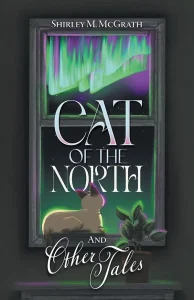
Cat of the North and Other Tales by Shirley M. McGrath
I will fully admit that I’m not a cat person. First, I am allergic to cats, so that doesn’t help matters. But, in addition to that unequivocal bias, I also find cats to be rather standoffish. The cats I have liked the best tended to be the ones that behaved most like dogs, and the dogs I have liked the least tended to behave most like cats.