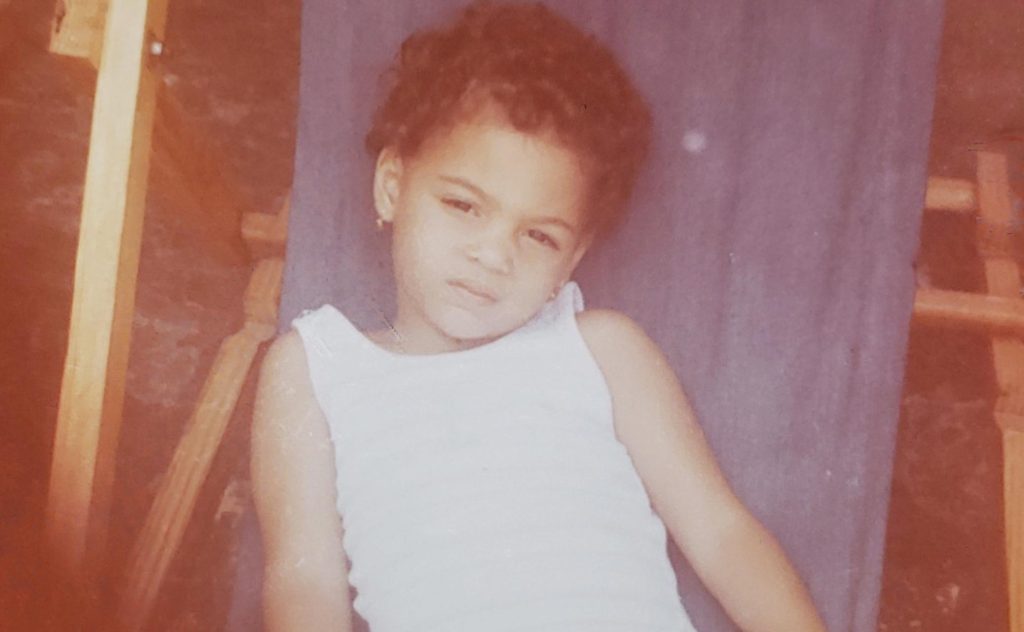
For much of my life I was told I was “too sensitive.” I understood right from the beginning that such a descriptor was not a compliment. The expressions on people’s faces, for one, made it clear. The expectations placed on me further solidified my understanding.
The word “too” in such a context is never really used positively. In fact, Merriam-Webster defines “too” as “an excessive degree” or “such a degree as to be regrettable.”
Resistance can look different from one person to the next. Resistance, for me, took the form of questioning, followed by pouting and then intense and prolonged contemplation (these reactions happened when I either didn’t get an answer I understood or didn’t get an answer I liked). I can imagine that my parents saw this behaviour as fundamentally unattractive, which is why they insisted I change. But, for better or worse, pouting was my outlet. Other children may have chosen to express their feelings by crying, shouting, throwing things or retreating into themselves. I chose pouting.
As an adult looking back now, I can imagine that it is perhaps because I navigated the world with such a “sensitive” label on my back that I was particularly attracted to compassion, though I wasn’t conscious of it then. As I grew older and learned what sympathy was, however, and then empathy and then compassion, I was able to see and feel how differently those words sat on me. I also saw how they looked and felt when expressed by others. I learned about the nuances in those definitions, and I felt my way through the many moments of scarcity—when caring for one another felt more like a thing of the past, a rare occurrence.
It is only recently, when I spent the day with one of my closest and oldest friends, that it really hit me: Compassion has been a significant theme in my life. I believe this because every time I encounter it, I am floored by its power over me.
Throughout the day, my friend and I talked about all sorts of random issues in our lives, both professional and personal. I was in complete control of my emotions then. But the moment I told her about a compassionate act I experienced, or observed in someone else’s life, it was like turning on a faucet: instant tears. My friend looked at me sideways each time I began to cry, wondering if I was okay and trying to find out if there was a way she could help. Through my tears, I laughed and told her I had no control over it; this was what happened every time. She grinned back at me, compassion shining in her eyes. Oh, God. Here we go again . . .
*****
Compassion has a profound effect on me, and I’ve simply accepted that about myself. In fact, what I believe is my first independent childhood memory deals with this very topic. I was roughly six years old, and I was in kindergarten. It was recess, and a few of us kids were playing on a static, wooden balance beam. My friends and I were running across the beam and then jumping off at the end. Our trajectory looked like a half circle: run straight, loop around, and then run straight all over again, all in high speed. During one of those rounds, I lost my balance and went hurtling toward the ground. I fell on my left arm, my elbow hitting a large rock (at least in the eyes of a child, it was) in the process. The moment I made impact, I knew I’d broken my arm.
I wasn’t a child who was prone to hysterics or exaggeration (I don’t think!), but I was a very active child, and I had broken my right arm merely six months before . . . so, I knew what a broken arm felt like. The memory of the pain was rather fresh in my mind.
What made this broken arm different from the last was where the break was located. Whereas the previous break occurred in the ulna and the radius—making my arm pop up like a rainbow—this break was at a joint and, therefore, wasn’t obvious.
I slowly got up from the ground, cradling my arm. A teacher approached and asked if I was okay.
“I broke my arm,” I said matter-of-factly. “Can I go to the nurse’s office?”
The teacher looked at me, doubt in her eyes.
“Are you sure?” she asked. “It doesn’t look broken.”
“It’s broken,” I insisted. “I promise. Can I go to the nurse?”
Though the teacher didn’t seem to believe me, she probably figured it would be a good idea for the nurse to take a look—just to be sure—so she granted me permission.
I turned away from her and immediately ran out of the playground and into the hallway, my arm flapping by my side. I don’t know if children really do these things (carelessly run when injured and without protecting said injured body part), but I can clearly picture myself running down the hallway and to the nurse’s office, my right arm pumping and my left arm just kind of dangling there, useless.
I stopped at Mrs. Sada’s door and knocked politely. When she told me to come in, I opened the door and stood just inside the room. Mrs. Sada took one look at me and then her gaze slid to my left arm.
Her expression changed instantly.
“Ohhhh,” she breathed, her voice full of understanding.
I don’t remember if she held her arms open to me then, welcoming me into her embrace, but in my memory, her reaction felt like a hug. I felt seen for the first time since I’d broken my arm.
So, what do you imagine I did then?
Yep.
I burst into tears.
From the moment I had fallen to the moment I had opened Mrs. Sada’s door, I hadn’t shed a single tear. I was hurting, but the mere fact of having no one see or believe my pain somehow kept me from accessing my emotions. Once Mrs. Sada saw me, however, once I felt like I’d found an ally, I allowed myself to let go and just be.
That sense of freedom was . . . glorious.
*****
I don’t know if I’m the only one who gets that choked up when I experience compassion, but I freely admit its effect on me, whether it is in real life, on a TV show, in a movie, or in the pages of a book. Regardless, I believe that compassion is rather important, and we often experience too little of it. The lack of its presence is probably why I’m so sensitive to it. It may, then, be unsurprising that I’ve decided to bring compassion to the foreground of my life—and maybe yours as well—because compassion can and should touch all aspects of our existence.
I have no desire to preach about this topic, nor do I pretend that I’m in any way an expert. I’m just a regular human being who wants to highlight and share those moments when compassion was present or should have been present. Perhaps one story will make someone feel seen or heard. Perhaps another will inspire someone to write their own story. Perhaps, still, certain words will help someone decide how to approach a problem they are facing. Who knows? The choices are ours to make.
I hope to share one to two stories a month. If you choose to respond to any of these posts, all I ask is for some kindness in the process. Let’s help each other up. Kindness and care go a long way.
As the great Sufi poet Rumi wrote in his poem All Rivers at Once:
“What is hidden in our chests?
“Laughter.
“What else?
“Compassion.”
Until next time.