

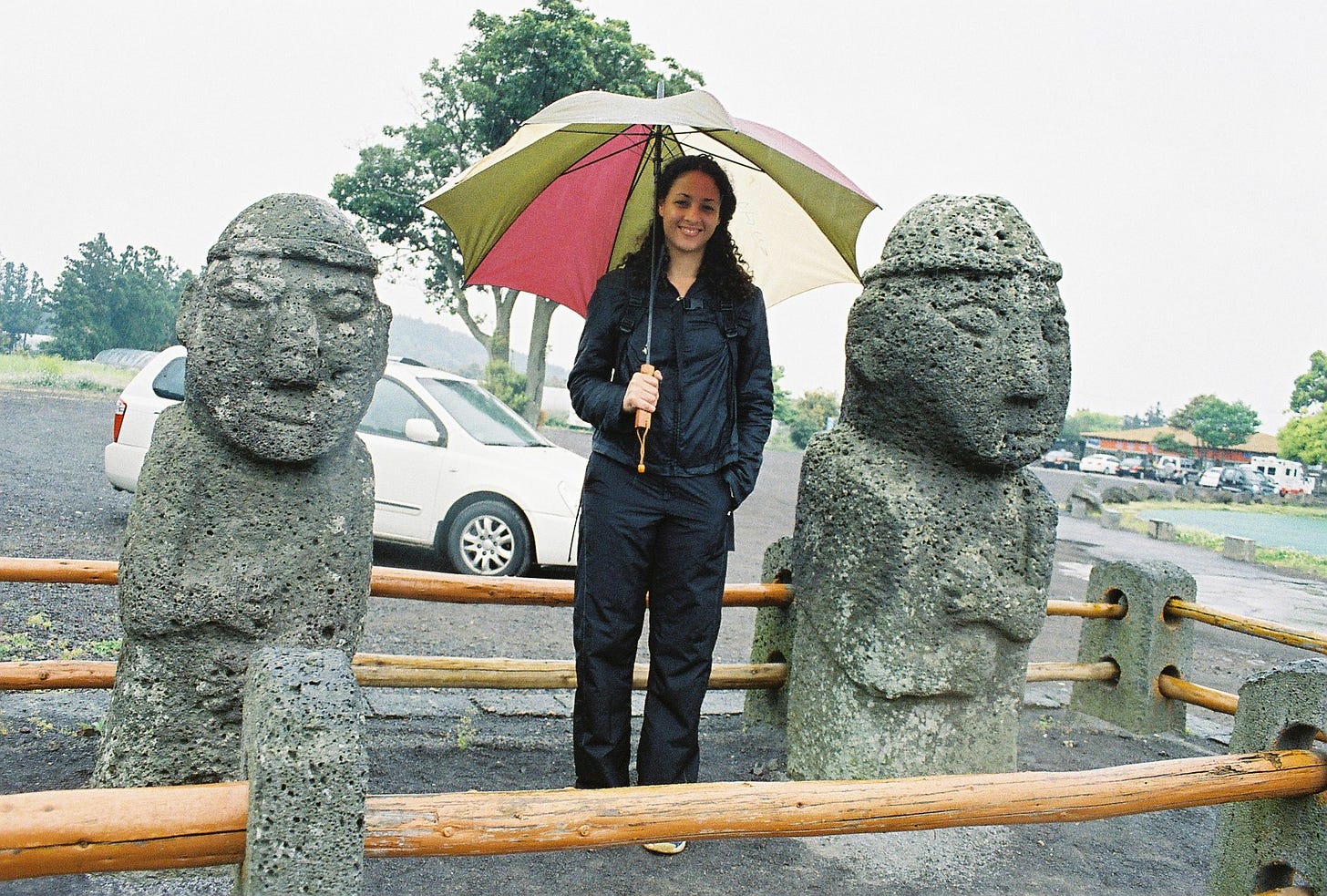
I have a certain dislike for umbrellas. I don’t know when it started, but for at least as long as I’ve been an adult, I’ve avoided using them.
There is a vague memory of trying to wield them on the streets of Montreal (or was it Halifax?) during my undergrad years. If they curve in your hand, it’s probably because they are the large format umbrellas that cover everything you could possibly need, but those are fucking heavy . . . and cumbersome too. If you can hold the handle square in your hand, they are probably the shorter, easier to manage, cheaper versions.
Regardless of their format, umbrellas cause a lot of unnecessary angst.
They leave a puddle of wet on the floor, any floor, you leave them on.
They will bring you bad luck if you open them indoors, apparently, so you end up having umbrella “waiting rooms” where they can spread their arms and delicately dry off.
They like to lose themselves. How many times have you lost an umbrella? Huh? Huh!? People bring them along while it’s raining and then forget about them when the rain stops and then go out and buy another one when it rains again . . . The amount of waste created by umbrellas should be researched, and no doubt the results would be appalling.
They drip off the ends so if you’re not in the exact right position, you might as well be under a spout.
They are fundamentally unstable. Add a smidge of wind, and oops! There they go, flipping themselves inside out. The moment that happens once, mind you, the higher the chance of that happening again. Like concussions.
They can be weapons. This is probably the thing I hate most about these plasticky contraptions. Somehow, when people use umbrellas, they magically forget that there are pokey bits at the ends that can gouge people’s eyes out. I always find myself ducking and weaving on an umbrella-laden sidewalk to keep my eyesight intact.
So, yeah. I don’t much care for umbrellas.
I am one of those people who opt for raincoats or rain jackets. I love me a deep hood within which I can bury my head. Sometimes, I’ll add a baseball cap to ensure my face is dry because the hood doesn’t always stay in place, and I hate the feel of raindrops dripping down my cheeks. Really, I just find this rain-protection method a more economical and ecological option. Yes, your lower half will get wet, but that’s often the case with regular-sized umbrellas too, no?
So, as I said, I’m a raincoat-er, not an umbrella-ist.
That being said, while I was living in Seoul, South Korea—between 2006 and 2008—I experienced rainy season there a few times. It was then that I realized I was probably one of the only people in the city who didn’t use an umbrella. In such a densely populated place (ten million people or so), imagine what the streets of Seoul look like during the rainy season. Indeed, the sidewalks are teeming with umbrella-ists trying to get where they need to get, as quickly and efficiently as possible.
I’m going to go ahead and call rainy season in South Korea monsoon season. And I call it such for a good reason. Hear me out.
I thought our rainy season in Haiti was pretty hardcore, but seriously . . . we had it good there. The rain, heavy and relentless, mostly came at night for a few hours; our days, on the other hand, were muggy but relatively clear. Really, it was kind of the perfect type of rainy season. You got to enjoy your day, and the rain came when you were probably already indoors.
Monsoon season in Seoul, on the other hand, consists of epic, daytime downpours that could sweep you down the road if the irrigation systems weren’t as robust as they are. One monsoony day, I was leaving a major hospital in the city after one of several visits to figure out a chronic condition I had, and I was feeling pretty down. I was always in pain, and they wanted to put me on meds that I would be dependent on for the rest of my life. I was contemplating whether I wanted to risk that reliance or go it alone.
When I got outside, the rain was coming down in sheets, at a diagonal. It was just miserable. And it wasn’t the kind of rain you could wait out. These downpours could go on for hours and hours, and I had to go home and get ready for work that evening.
I trudged over to the corner of the street. It was one of those major intersections where pedestrians had to wait quite a while before the light turned in their favour. I was standing there, wet and pathetic, the raincoat barely protecting me, my face getting pummeled by the rain due to its diagonal behaviour that day (I hadn’t yet learned the baseball cap trick). A dozen or more people stood around me, all protected by their expansive umbrellas.
The young woman next to me, probably around my age (mid-twenties), looked over, and our eyes connected for a brief second. She didn’t hesitate but a moment before she shifted her umbrella over, providing shelter from the onslaught.
It was a kindness she hadn’t needed to extend. I certainly wouldn’t have begrudged her that, but still . . . she held the umbrella aloft, and I melted under her grace.
The light turned green, and we walked across the multi-lane street and to the other side in silence. When we got there, I said to her:
“Komapsumnida.”
I used the pure Korean form of gratitude, rather than the Chinese-influenced “kamsahamnida,” even though the latter was more common. But I preferred to honour Korea’s extraordinary history, so I always went that route.
She smiled, gave me a slight bow, and we parted ways.
That event happened eighteen years ago.
John Albert Holmes, a poet and critic in the early twentieth century, said:
“There is no exercise better for the heart than reaching down and lifting people up.”
That woman saw a bedraggled foreigner who didn’t have the good sense to carry an umbrella (silly raincoat-er), and she sheltered me. She “reached down and lifted me up.”
The memory of that moment will live on until there is no memory left in me.
And, today, I want to say again: Komapsumnida.
Your kindness is remembered.
Until next time.

#11 A Giving Spirit
I lived in France for three years in my twenties (2003–2006). I had moved there for love, and despite my best efforts, that relationship hadn’t worked out. Still, I had a work permit, a job, and I was slowly making my own friends.

#10 Reciprocity
Several months ago, a man I’ve been seeing became woefully sick. He hadn’t had a cold or other illness like this in decades, he told me. He seemed both perplexed and angry that his body had betrayed him.

Articles coming soon
Lorem ipsum dolor sit amet, consectetur adipiscing elit, sed do eiusmod tempor incididunt ut labore et dolore magna aliqua. Ut enim ad minim veniam, quis

#9 Boundaries? What Boundaries?
As we navigate life, trying to squeeze the best out of every day, we are inevitably faced with tough scenarios. My perspective on the world is unique simply because each of us is unique. I view things through a lens that has been shaped by my childhood, the interactions I’ve had in my adult life, and the many good and bad experiences I’ve had along the way. My traumas will be different from yours, and what triggers me might not trigger you.

#8 The Accountant, the Boss and the Lawyer
I lived in France for three years. Much of that time was spent working for a business school as the incoming students’ coordinator. It was a really interesting job. There was rarely a dull moment as I dealt a lot with students who were from another culture and who often had random questions they came by my office to ask. In some ways, I was a kind of therapist to them, helping them solve problems and providing an ear when they wanted to talk.
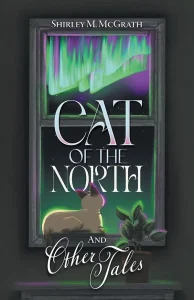
Cat of the North and Other Tales by Shirley M. McGrath
I will fully admit that I’m not a cat person. First, I am allergic to cats, so that doesn’t help matters. But, in addition to that unequivocal bias, I also find cats to be rather standoffish. The cats I have liked the best tended to be the ones that behaved most like dogs, and the dogs I have liked the least tended to behave most like cats.